


The History of the Munich Oktoberfest: From Royal Romance to Bavarian Cultural Treasure
Liam Brömer
2/18/20263 min read
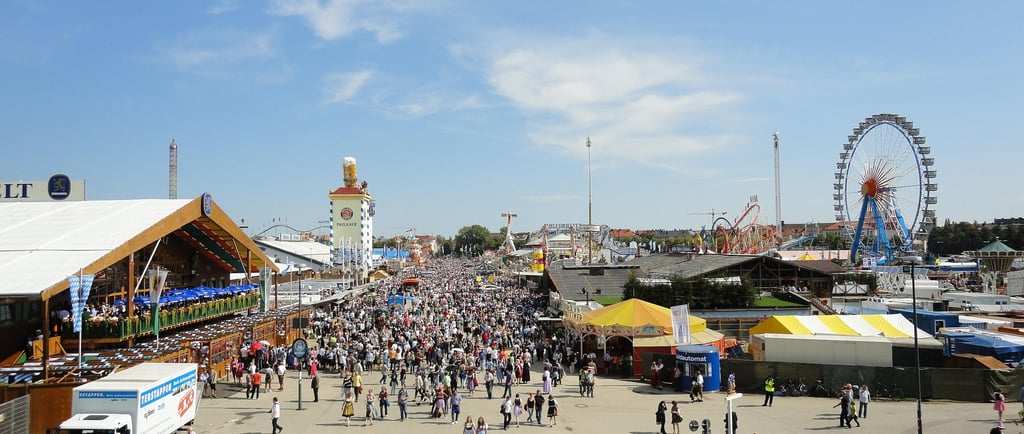
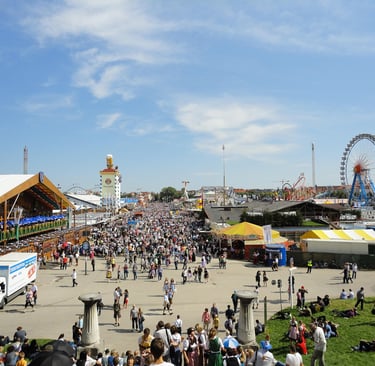
When you first step onto the Theresienwiese, you are overwhelmed by a flood of sensations: the roar of the rides, the scent of roasted almonds and grilled fish (Steckerlfisch), and the rhythmic clinking of thousands of glass beer mugs. Behind this modern spectacle lies a history that is as Bavarian as it gets—a mixture of chance, pragmatism, and a unique love for conviviality.
The Origin
Imagine celebrating your wedding and, two hundred years later, six million guests are still showing up. That is exactly how Oktoberfest began. On October 12, 1810, the Bavarian Crown Prince Ludwig (later King Ludwig I) married Princess Therese of Saxe-Hildburghausen. Ludwig was a man with a keen sense of staging and national pride. Rather than keeping the wedding behind closed church doors and in magnificent halls, he decided to involve the entire population of Munich.
The festivities lasted five days and culminated in a massive horse race on a wide field just outside the city gates. This area was named "Theresienwiese" (Therese's Meadow) in honor of the bride. The people of Munich were so thrilled by the atmosphere that it was decided the festival should be repeated the following year. At the time, no one suspected it would evolve into the largest folk festival in the world. What began as a purely sporting event quickly became an agricultural festival where regional farmers presented their finest cattle and horses—a relic of this era is the Zentrallandwirtschaftsfest (Central Agricultural Festival), which still takes place every four years in parallel with the modern event.
Bavarian Beer and Festival Tents
In the early decades, the massive tents we see today did not exist. Beer was served from small wooden shacks that resembled modern-day snack stands. As Munich grew, however, the breweries became more powerful and the thirst of the visitors increased. Toward the end of the 19th century, the golden era of "Wiesn architecture" began. In 1896, breweries began erecting enormous festival halls that could accommodate thousands of people. These "beer castles" served not only to dispense drinks but also to represent the pride and power of the Munich brewing guild.
An interesting historical detail is the shift in timing. Originally, the festival did take place in October. However, anyone familiar with Bavarian weather knows that "Golden October" can quickly turn into cold, wet days of sleet. To better take advantage of mild late-summer evenings, the festival was moved forward in 1872. Since then, Oktoberfest has usually begun in mid-September and traditionally ends on the first Sunday in October. The name remained as a tribute to the royal wedding of 1810.
Why Do We Still Celebrate Today?
One must ask: Why has this festival survived two centuries, several wars, hyperinflation, and pandemics? The answer lies in the Bavarian attitude toward life known as "Liberalitas Bavariae"—the principle of "live and let live". Oktoberfest is one of the few places in the world where social hierarchies are completely set aside for a few hours. In a festival tent, a laborer might sit next to a billionaire, a Japanese tourist sways to the music with a retiree from Munich, and a student shares a pretzel with a lawyer.
The traditional attire—Lederhosen and Dirndl—acts as a "uniform of equality". If you wear the costume, you belong, regardless of where you come from. Furthermore, Oktoberfest serves as an anchor of tradition in a rapidly changing world. While digitalization progresses outside, much remains the same on the Wiesn: bands play traditional brass music (at least until 6:00 PM), the beer is brewed according to the Purity Law of 1487, and servers still carry ten or more heavy mugs through the narrow aisles of the tents.
The "Oide" Wiesn: A Return to the Roots
Those who wish to leave the hustle and bustle of modern rides behind can find the "Oide Wiesn" (Old Wiesn) in the southern part of the grounds. Introduced in 2010 for the 200th anniversary, it was originally intended as a one-time event. However, the people of Munich loved it so much that it became a permanent fixture. For a small entry fee, visitors can experience how the Wiesn felt a hundred years ago: historical chain carousels, folk dance groups on real wooden floors, and beer served from traditional wooden barrels known as Hirschen. It represents the quieter, nostalgic side of the festival, proving that at its core, Oktoberfest has remained a family celebration.
A Global Phenomenon
Today, the Wiesn is a massive economic factor, but above all, it is a symbol of Munich. Every year, over 7 million liters of beer are drunk and around 500,000 roasted chickens are consumed. Yet the true stories do not happen in the statistics, but at the tables. It is about the fleeting, spontaneous acquaintances, the shared singing, and the indescribable feeling of being part of the whole.
Oktoberfest is more than just an event; it is the collective memory of a city that is proud of its history and knows how to have a good time. Anyone who has experienced the live cry of "O’zapft is!" when the Lord Mayor taps the first keg understands: here, life itself is being celebrated. No matter how wonderful the description sounds from afar, you can only truly experience the Wiesn's charm and become part of this unforgettable cultural festival in person.

